CRM & analyticsCRM & analytics
9 min read
AI Call Routing: Intent, Time and Caller Type
Priority-ordered routing rules for voice, with worked examples — why a caller should never be asked to press a number, and what to do when nobody answers.
The daily work of a call centre is gathered here: where a call is routed, how it passes from AI to a person, which CRM fields the outcome is written to, how quality is checked, and what happens to calls that arrive at peak times, at night or in several languages.
The articles are for call-centre and operations leads. The AI voice agent itself is described on the call center page, and where call outcomes are recorded on CRM.
5 of 17 posts shown
Priority-ordered routing rules for voice, with worked examples — why a caller should never be asked to press a number, and what to do when nobody answers.
Comparing the two operating models by availability, integration, consistency, escalation and complexity — and the volume at which the answer changes.
A practical routing model for overnight calls — capture, booking, escalation and next-day follow-up, with a separate behaviour for each type of caller.
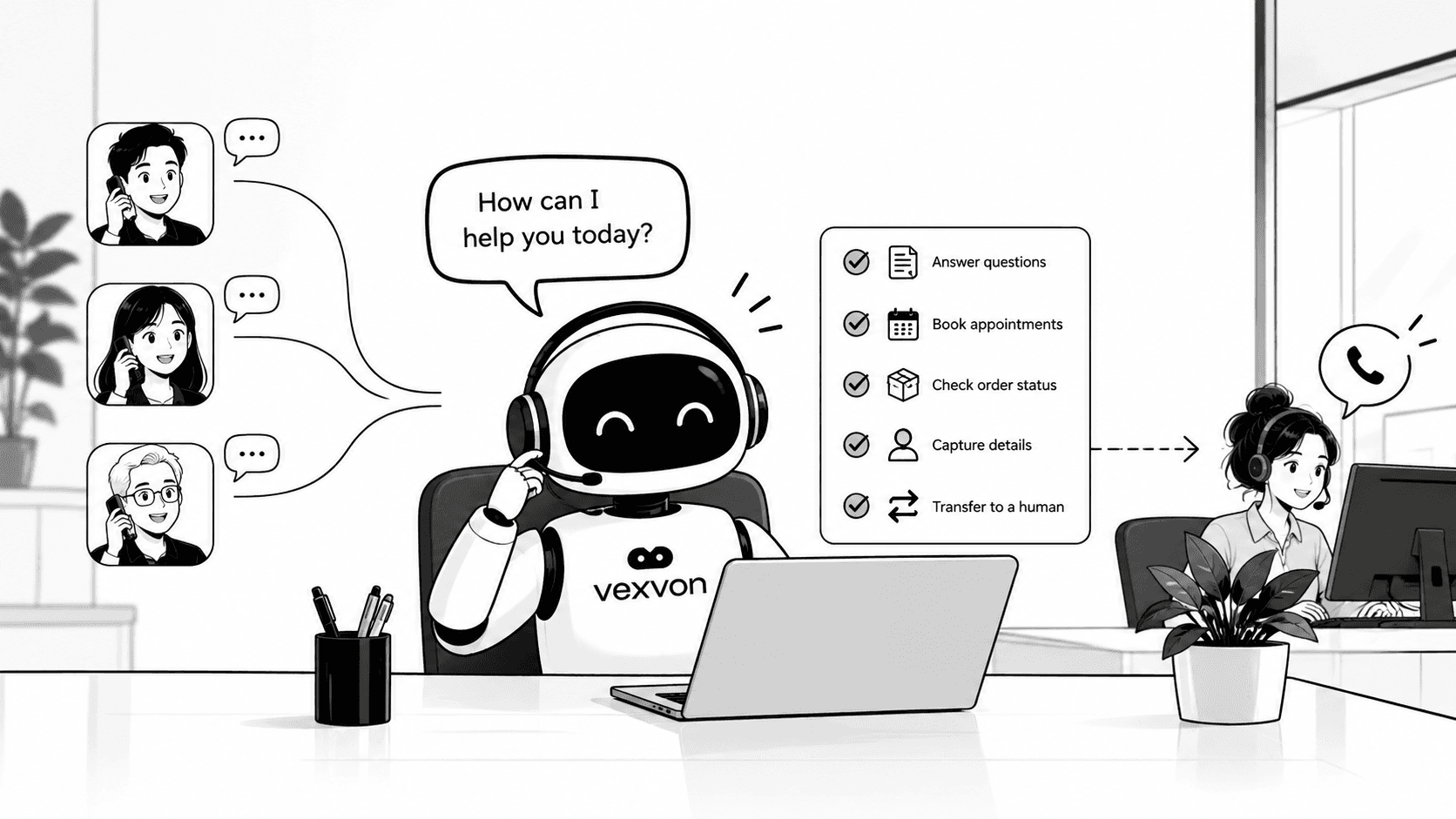
How an AI voice agent answers inbound calls, what it runs on, which calls should reach a person instead, and what to check before you put one on your line.

Seven areas to evaluate before signing: telephony, the conversation layer, handover, CRM integration, routing, analytics and governance — with the questions that get real answers.
See Vexvon live in a 10-minute demo.